OpenZhenZhen AI プロンプトギャラリー · MiniMax H3 · video
おじいちゃんがついに見た
Grandpa Finally Saw It
「おじいちゃんがついに見た」は MiniMax H3 を使用した作品です。OpenZhenZhen で元のプロンプトと生成例を確認し、創作の参考にできます。
プロンプト
中国語プロンプト
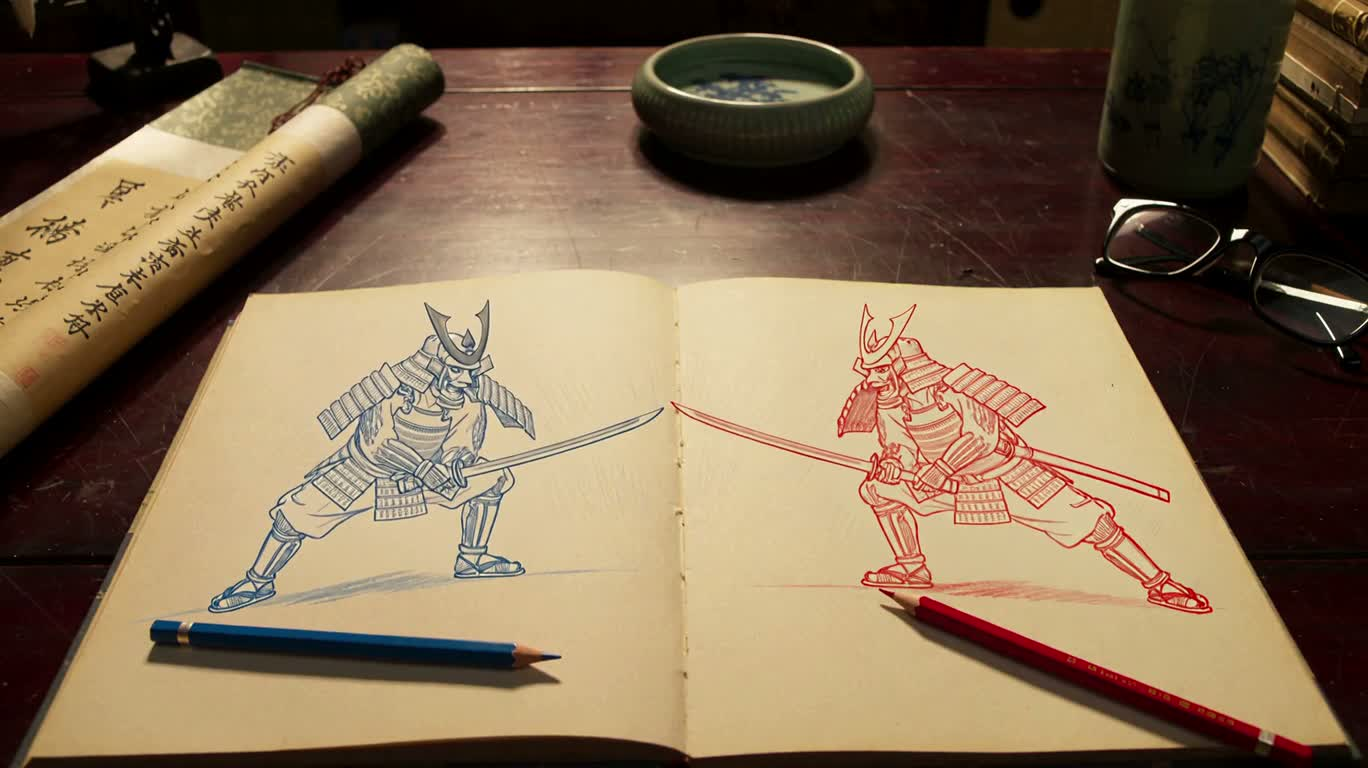
制作一段 20 秒、16:9 的电影感画面。开场是一张摊在深色木桌上的泛黄速写本:左页画着一个蓝色彩铅线条构成的微型武士,右页画着一个红色彩铅线条构成的微型武士,两人相对而立,刀尖几乎相触。蓝色和红色彩铅放在书页下方。昏暗书房里,温暖的侧光照亮书页,背景摆着书法挂轴、陶器、旧书、毛笔和黑框眼镜。武士始终非常小,约有一支彩铅那么长。两人全程保持二维彩铅画的质感,线条潦草、层层叠加,不出现写实皮肤、布料或实体 3D 身体。书桌与房间呈照片般写实的质感。 0–2 秒:保持开场构图,微风轻拂书页边缘,尘埃在暖光中飘动。蓝色和红色的纸上人物开始活动,随后从纸面立起,但仍由彩铅线条构成。 2–7 秒:两名武士在摊开的书页上快速冲锋交战,动作清晰,包括突刺、格挡和跃起。刀刃在书页中间相撞,彩铅粉末飞散,脚下留下淡淡的痕迹。一把刀划破纸面,留下微微翘起的小裂口。 7–13 秒:红色武士跃上桌面,蓝色武士紧追不舍。两人从眼镜旁掠过,撞上堆叠的旧书,一本书滑落,书页随之翻动。微小动作通过可信的接触引发连锁反应;不能像巨人一样凭蛮力砸碎物品。 13–17 秒:两人在陶制笔筒周围交战。笔筒倾倒滚动,毛笔散落桌面;战斗继续在散开的书本和文具之间展开。破坏逐步累积,人物保持彩铅大小,房间的光照方向始终一致。 17–18 秒:远处传来门轴吱呀声,两名武士在交锋中同时定住,随后冲回速写本。 18–20 秒:两人重新压平融入画页,回到原来的蓝左红右对峙姿势,纸上的小裂口仍然保留。背景中出现一位短灰发、穿着朴素传统家居服、手捧热茶的日本老爷爷。他默默看着凌乱的桌面,又望向静止的速写本,惊讶地睁大双眼。最后定格于摊开的书本和书本后方的老爷爷。 使用单一连续镜头,机位保持在桌面高度附近,浅景深跟随微型人物穿过物件之间真实存在的空隙,最后停在结尾揭示画面。保持写实环境与明显二维彩铅人物之间的质感对比。无对白、旁白、字幕、标志或额外角色。禁止武器复制、颜色互换、体型变化、无接触的破坏,以及损坏状态复原。
英語プロンプト
Create a 20-second cinematic sequence in 16:9. Begin with an open, yellowed sketchbook on a dark wooden desk: a tiny blue pencil-line samurai is drawn on the left page and a tiny red pencil-line samurai on the right, facing each other with their sword tips nearly touching. Blue and red colored pencils lie near the bottom of the pages. In the dim, warmly side-lit study, a calligraphy scroll and pottery sit among old books, brushes, and black-framed glasses. Keep the samurai extremely small, about the length of a pencil. They remain two-dimensional colored-pencil drawings throughout, with scratchy, layered strokes and no realistic skin, fabric, or solid 3D bodies. The desk and room are photorealistic. 0–2s: Hold the opening composition as a slight breeze stirs the page edges and dust drifts through the warm light. The blue and red drawn figures begin to move, then peel upright from the paper while remaining made of pencil strokes. 2–7s: The samurai charge and duel across the open pages with clear, fast thrusts, parries, and leaps. Their swords meet at the center; colored pencil dust scatters and their feet leave faint marks. A blade nicks the paper, lifting a small torn edge. 7–13s: The red samurai springs onto the desk and the blue samurai pursues. They race past the glasses and collide with stacked books, sending a book sliding down and pages fluttering. Their tiny movements trigger believable, contact-driven chain reactions; nothing is smashed by oversized strength. 13–17s: They fight around a ceramic brush pot. It tips and rolls, spilling brushes across the desk; the commotion continues among the scattered books and tools. Keep the damage cumulative and the figures pencil-sized, with the room’s lighting direction consistent. 17–18s: At a distant creak, both samurai freeze mid-clash, then dash back toward the sketchbook. 18–20s: They flatten back into their original blue-left and red-right drawings, restoring their mirrored stances while the small paper cut remains. An elderly Japanese grandfather with short gray hair and simple traditional home clothes appears in the background holding a steaming teacup. He silently looks from the messy desk to the still sketchbook, visibly astonished. End on the open book and the grandfather behind it. Use a single continuous, low tabletop-height camera move with shallow depth of field, following the tiny fighters through real gaps between objects and settling on the final reveal. Preserve the contrast between photorealistic surroundings and visibly two-dimensional colored-pencil characters. No dialogue, narration, captions, logos, or added characters. No weapon duplication, color swapping, size changes, unexplained destruction, or damage that reverses.
テーマとスタイル
画像・動画プロンプトをもっと見る · 画像を生成 · 動画を生成 · AI キャンバスで作成
関連作品
- 生体機械のハリネズミの肖像
「生体機械のハリネズミの肖像」は MiniMax H3 を使用した作品です。OpenZhenZhen で元のプロンプトと生成例を確認し、創作の参考にできます。
- レトロフューチャーな宇宙少年の肖像
「レトロフューチャーな宇宙少年の肖像」は MiniMax H3 を使用した作品です。OpenZhenZhen で元のプロンプトと生成例を確認し、創作の参考にできます。
- 星穹の秘法:双子の最終決戦
「星穹の秘法:双子の最終決戦」は MiniMax H3 を使用した作品です。OpenZhenZhen で元のプロンプトと生成例を確認し、創作の参考にできます。
- マカクのリング反撃:マグネシウムパウダーで屈強な男を打撃
「マカクのリング反撃:マグネシウムパウダーで屈強な男を打撃」は MiniMax H3 を使用した作品です。OpenZhenZhen で元のプロンプトと生成例を確認し、創作の参考にできます。
- 夏のチョークの幻影:冷蔵庫のホッキョクグマ
「夏のチョークの幻影:冷蔵庫のホッキョクグマ」は MiniMax H3 を使用した作品です。OpenZhenZhen で元のプロンプトと生成例を確認し、創作の参考にできます。
- 雪原の戦斧の王
「雪原の戦斧の王」は MiniMax H3 を使用した作品です。OpenZhenZhen で元のプロンプトと生成例を確認し、創作の参考にできます。